Works through an outage
Games and prize printing keep running if the store's internet drops. The kiosk does not need a connection to hand a customer a voucher.
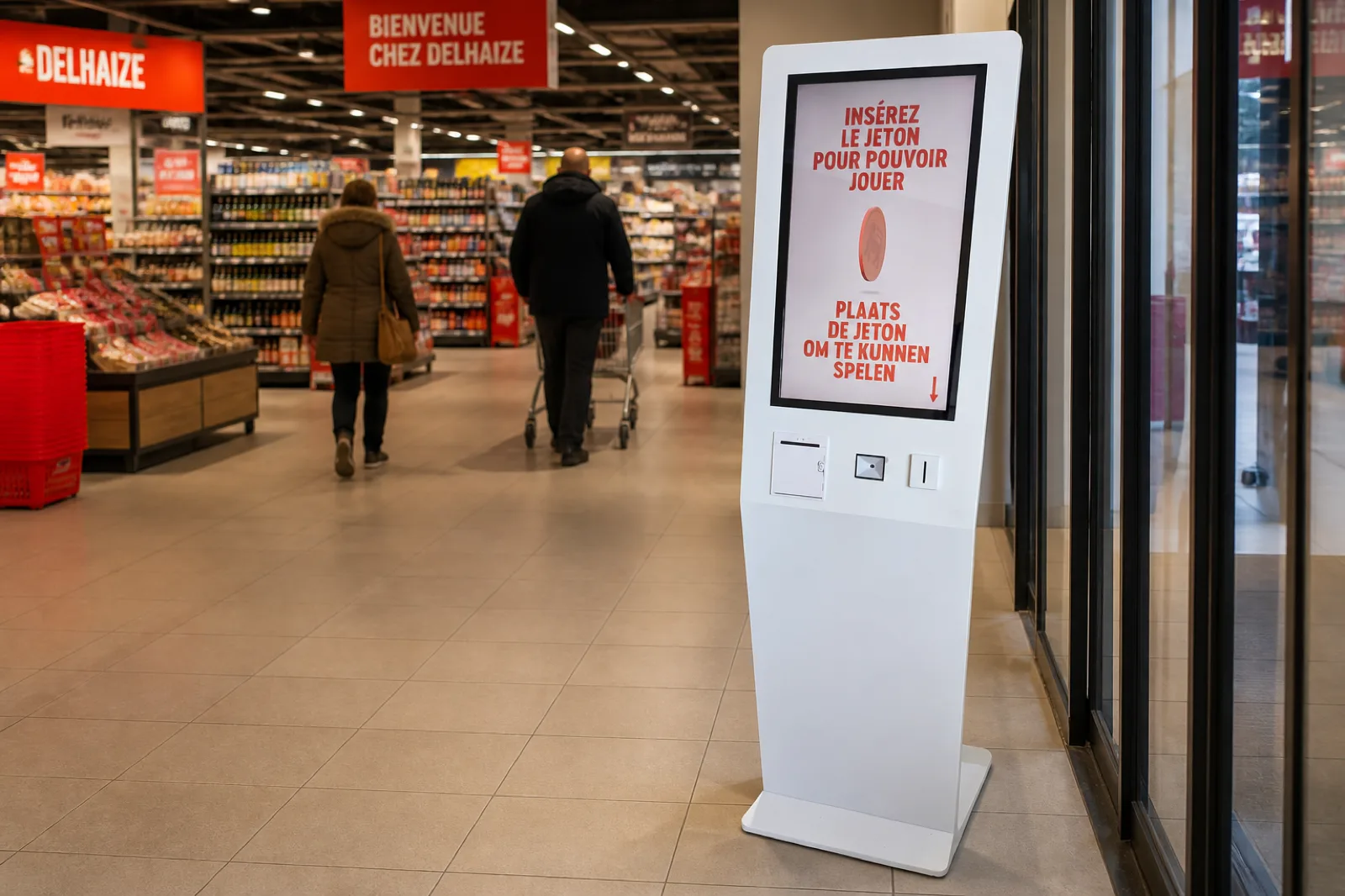
In-store interactive kiosks
ACMEA builds the kiosks and runs them: the game, the prizes, the budget limits, and a dashboard that shows what each store did today. The games keep working through an outage, so a dropped connection does not cost a customer a voucher.
Overview
Interactive games and promotions with control over budget, schedules, and prizes. The store gets the machine. HQ gets the levers, from one view.
Games and prize printing keep running if the store's internet drops. The kiosk does not need a connection to hand a customer a voucher.
Change the game, the prize, and the schedule without touching the hardware. A slot this week, a wheel next, and hours that follow the busy times.
Every store on one view: what played, what was won, and what needs a refill. Staff stay on the floor instead of working a backend.
How it works
The store side runs without a connection. The control side runs from one place. That split is the design, not a limitation.
A touchscreen the customer plays. Token or on-screen, it starts a game in one tap and prints the voucher at the end.
The game and the printer run on the kiosk itself. Losing the shop-floor network does not stop anyone playing or getting a voucher.
Promotions, prize rules, and printer status are changed and watched from one dashboard, without a trip to the store.
Game experience and rules
The kiosk is worth a stop when the game is worth playing. The rules keep the budget honest.
Pick a store jackpot slot or a wheel of fortune. Refresh the look, the prizes, and the rules for a season or a week, and the hardware stays put.
Performance tracking
The dashboard turns a row of kiosks into something you can read: play, prizes, stock, and equipment.
How many customers played, and when the store peaked.
Won, remaining, and what needs a top-up, live.
Spend stays inside the campaign envelope, so nothing surprises you at the end.
A kiosk that stops, or a printer low on paper, shows up immediately.
Rewards and budget control
A chain is many different stores. Each location gets its own quotas and its own hours, so a busy branch and a quiet one run different campaigns.
Set a daily quota per location: a small discount, a bigger voucher. Spend follows each store's own traffic.
Start, end, and active hours are set for each location, not for the whole chain.
Prizes spread across the days a store is open, so one branch does not burn through its budget early.
A winner gets a valid voucher printed at the kiosk, in that store.
New revenue
The kiosk is a screen customers already touch. Let a brand sponsor the game: co-branded games and sponsored activations, and that screen earns money instead of costing it.
How ACMEA delivers
ACMEA carries the kiosk from the first store visit to a supported network, so the team is never left to run it alone.
Watch the customer flow and set the campaign goal before deciding on hardware.
The software and the machine it runs on: touchscreen, printer, reader.
The game set and the rules that keep it honest: limits, jackpot timing, hours, quotas.
Change themes, prizes, and schedules from one dashboard, and watch every store and printer.
A helpdesk the store can call. Broken units, empty printers, and software faults get fixed without the team debugging.
Hands-on training so staff run a campaign and read the dashboard without the manual open.
Why ACMEA
The machine is the easy part. Integration, uptime, content, and support are where projects stall. ACMEA builds the platform and the operating model together.
A kiosk is one system we build and then operate.
Reliability is part of the build, not an afterthought.
30+ years across IT change, automation, and delivery.
We deliver working systems, not advice.
FAQ
The kiosk keeps running. Games stay playable and vouchers still print, because the game runs on the kiosk rather than depending on a connection.
We supply the reference kiosk and peripherals, and can work with existing hardware where a store already has suitable units.
It connects to what the campaign needs: prize validation, voucher rules, and reporting. The exact integration is set during assessment.
Daily prize limits, jackpot timing, and per-store quotas are set centrally, so spend stays inside the campaign envelope instead of running open-ended.
Assessment first, then a small pilot, then a phased rollout. Stores come online in waves, with support in place from day one.
Yes. Sponsored games and brand activations turn the screen into a revenue line rather than a cost centre.
Start with a kiosk assessment
Tell us the stores, the campaign, and the budget you want to control. We will map the kiosk, the integrations, and the rollout before you buy hardware.
Start a kiosk assessment